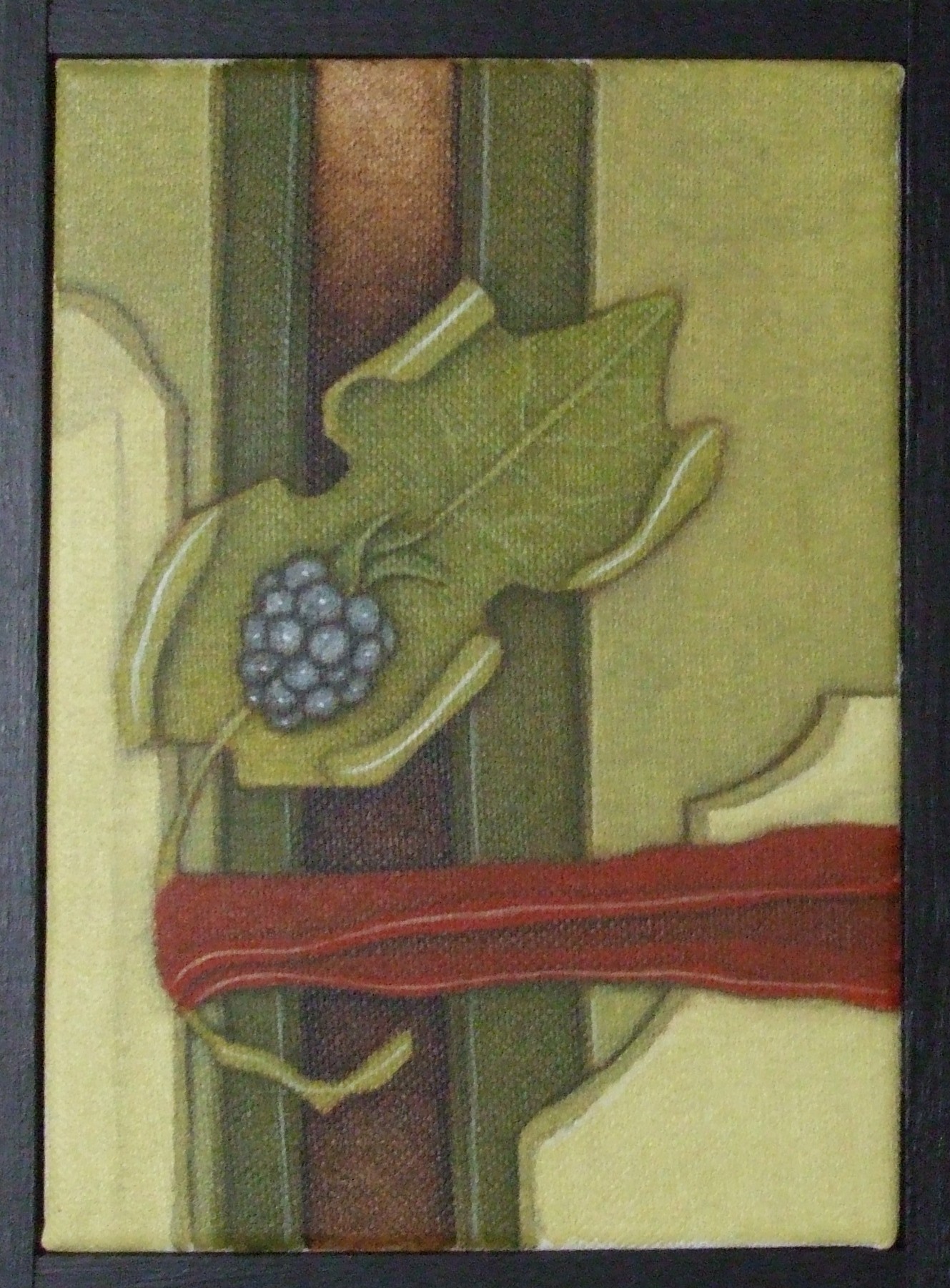
Michele Bledsoe “Never Let You Go” acrylic on canvas 7″ x 5″
Michele Bledsoe “Never Let You Go” acrylic on canvas 7″ x 5″
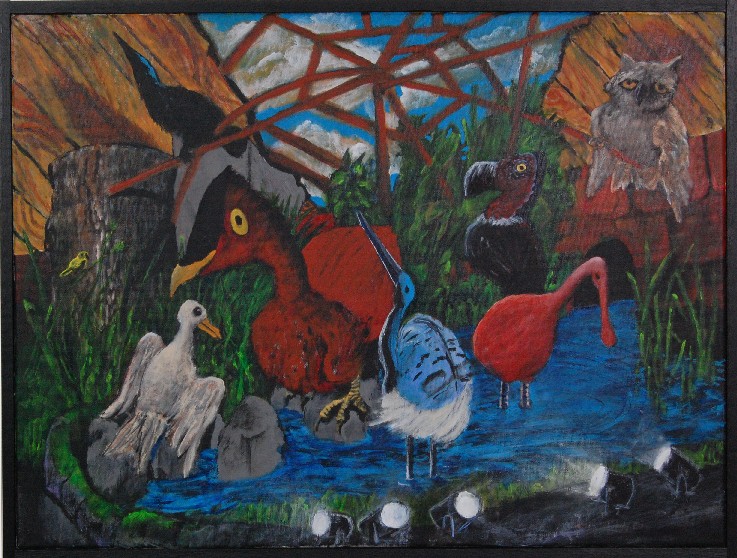
Richard Bledsoe “Aviary” acrylic on canvas 16″ x 20″
“Don’t wait for inspiration. It comes while one is working.”
-Henri Matisse
So while this blog will be an ongoing confrontation with the forces of evil, I realize an endless presentation of complaint and attack would be tiresome. It also does not reflect the positive vision I have of this life.
The world is full of joy, and the Lord has put us here to have life more abundantly. I relish the work that I’m doing-the painting, the writing, the sense that I can make a difference in this time of need-and that many others are also rising to the challenges that our society is facing.
Our brave founding fathers put everything they had on the line to create a new way of existence on this planet. Their ideas, while immanently practical, also contained true hope and faith in individual potential. Now it’s our turn to make sure America, the greatest of human endeavors, survives for future generations to experience.
Still so much to be done! It’s all so exciting.
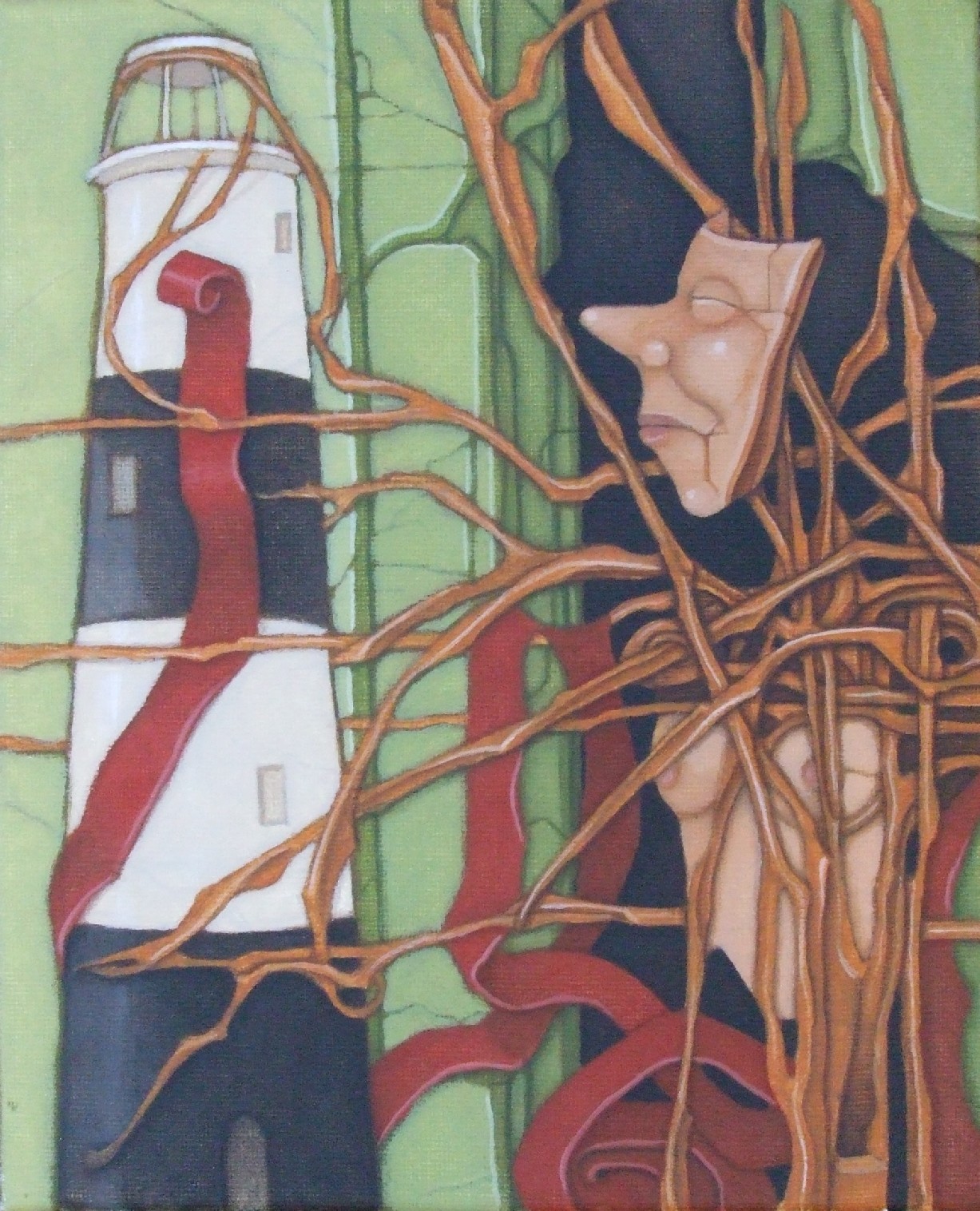
Michele Bledsoe “The Lovers” acrylic on canvas 10″ x 8″
“The function of fashionable art is to give fashionable people a painless simulation of culture.”
-Billy Childish and Charles Thomson
Founders of Stuckism/Remodernism
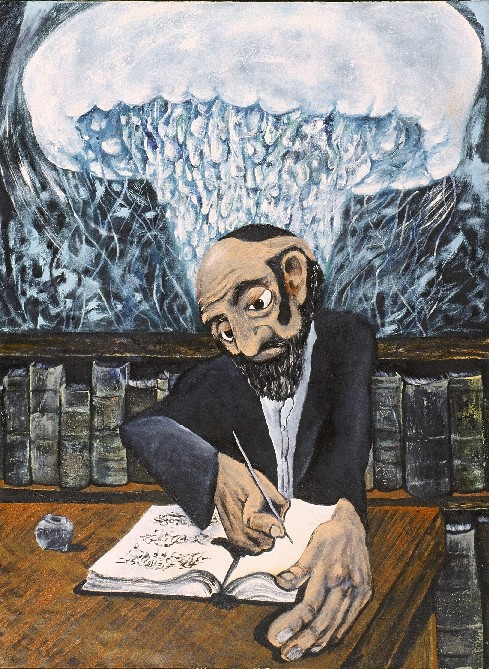
Richard Bledsoe “Hapless Scrivener (Make With The Word)”
oil on canvas 48″ x 36″
Ed Driscoll: Starting to Peel Away the Layers
I have been very gratified about the increasing coverage of the state of the visual arts in the various conservative blogs I follow. Any political victories that can be won will be only temporary if the overwhelming toxic direction of our culture is not challenged. Art is at the core of the struggle for the type of future we will have.
It helps that establishment exhibitionist Camille Paglia is hyping a new book on the topic. An elitist insider is acknowledging that there are problems in the arts, serious issues of relevance and quality. It’s an important first step, a chink in the armor of the cultural leftist hegemony.
From what I gather from the initial presentations, Paglia has identified the breakdown of tangible technical skills on the one hand, and the creeping dominance of ideology on the other, on why art has lost its ability to connect with a broad audience. She admits that hostility towards capitalism has isolated agenda-driven artists from participating in the genuine dynamics of our culture.
And she rightly places blame on the institutional elements that perpetuate this sick environment.
But as a participant and beneficiary of the the same system she is critiquing, she does not go far enough in her analysis. The results she describes-acceptance of impermanence, rigid conformity, rejection of religion, the great disconnect of art from life-are all goals of the Marxist-driven long march through the institutions. The horrible state of the arts is no accident, but the outcome of the determined efforts of the those who are looking to destroy our society and install themselves as rulers over a mythical egalitarian paradise. It has been a covert war of conquest.
In his post Ed Driscoll sees through Paglia’s positioning, and examines the underlying assumptions of the Modernist era-art as a force of social deconstruction. This mode was not so much about art as it was about fulfilling the agenda. Modern Art was an early victim of Marxist infiltration. An exciting era of new possibilities was mutated into a tool of destruction, a weapon of the glorious revolution.
Remodernism is the chance to get art back on track. It rejects the corruption of art by leftist establishment rules, and releases the artist to express individual vision. Remodernism is the optimistic art of the future.
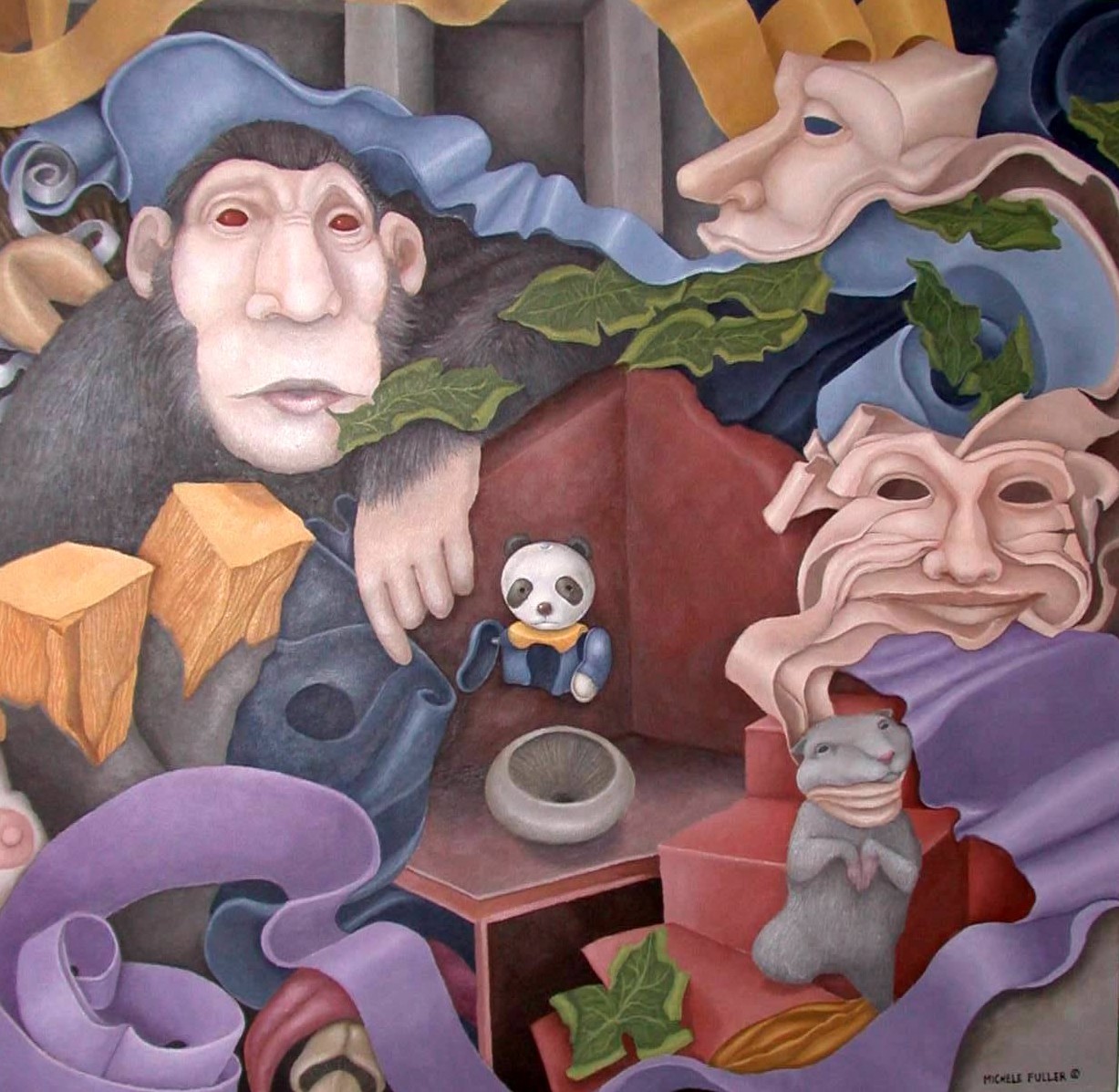
Michele Bledsoe “The Kingdom” acrylic on canvas 24″ x 24″

Richard Bledsoe “Rider” Acrylic on canvas 18″ x 18″
After being exposed to the Remodernist manifesto of Charles Thomson/Billy Childish, I was compelled to write down my own ideas. This statement was introduced in the original Phoenix Remodernist exhibit “The Soul on Earth” in September 2010 at Deus Ex Machina Gallery; a revised version was produced for the Trunk Space Gallery “A Young City in An Ancient Land” in January 2012. Although used as a curator’s statement for these shows, the ideas are general enough to serve as a manifesto for the Phoenix Remodernist movement.
No one should be surprised, because it’s the same old story. The era of dissolution has come around again.
Civilization is seething, crumbling the carefully constructed but carelessly maintained social structures which have been taken for granted. This breakdown is global in scale, and it is accelerating; for millions of people, life will never be the same. It is the end times. But more importantly, it is also a new beginning.
As this turmoil unfolds, challenging our most basic assumptions, artists in Phoenix are contributing to the latest chapter of the ongoing story of art. There’s still plenty of groupthink Postmodern work getting made: redundant formalism, paint-by-numbers pop, and insubstantial conceptualism. Detached and irrelevant, these modes of art do capture something of the spirit of this era, as a time of decay. Invested in the old order, a cozy cocoon of crony capitalism, the creators of these works are provisioning a tomb with mummified ideas and simulated treasures.
However, there are artists who reject the futile remake/sequel dynamic that has come to dominate the establishment. All throughout the Valley of the Sun there are artists whose work is not contrived to fit existing art templates, but is an organic outgrowth of their own experiences and personalities. These artists work in a variety of styles and mediums, and no one label would fit them all.
Among all this diverse creativity, some artists, while following their individual visions, have arrived at common ground. Phoenix Remodernism has grown into a recognizable movement.
Our work is appropriate for a young city in an ancient land. With the wonder of youth, we wander in the ruins of fossilized civilization. With our own hands, we assemble from the debris affectionate homages to the human condition, works afflicted with humor and humbled by grace. We don’t care about impressing the gatekeepers, we want to interact with everyone. We are story tellers. We love where we’ve come from, and we preserve that love for the future to see. We invoke an eerie nostalgia for the past, for we accept we will be joining that infinite regression. We are the latest iteration of the American character: ordinary people working as explorers and inventors, self-reliant and productive. We make a complex art for complex times.
Remodernism began in London in 1999, founded by punk rock Renaissance man Billy Childish and painter Charles Thomson as a protest against elitist art world politics. Remodernism recognizes art making as an inclusive, spiritual activity, and encourages a DIY mentality.
Remoderism is the return of art as a revelation. We are showing things about ourselves that can also be universally recognized. Our art symbolically represents flawed, searching humanity participating in birth, existence and death. It is mysterious and moving, comic and tragic, clumsy and elegant. It is a celebration of the beauty and weirdness of life.
-Richard Bledsoe
 remodernamerica.com